10. My Dream Machine, the Boeing 777
It is by logic that we prove, but by intuition
that we discover.
—Henri Poincare
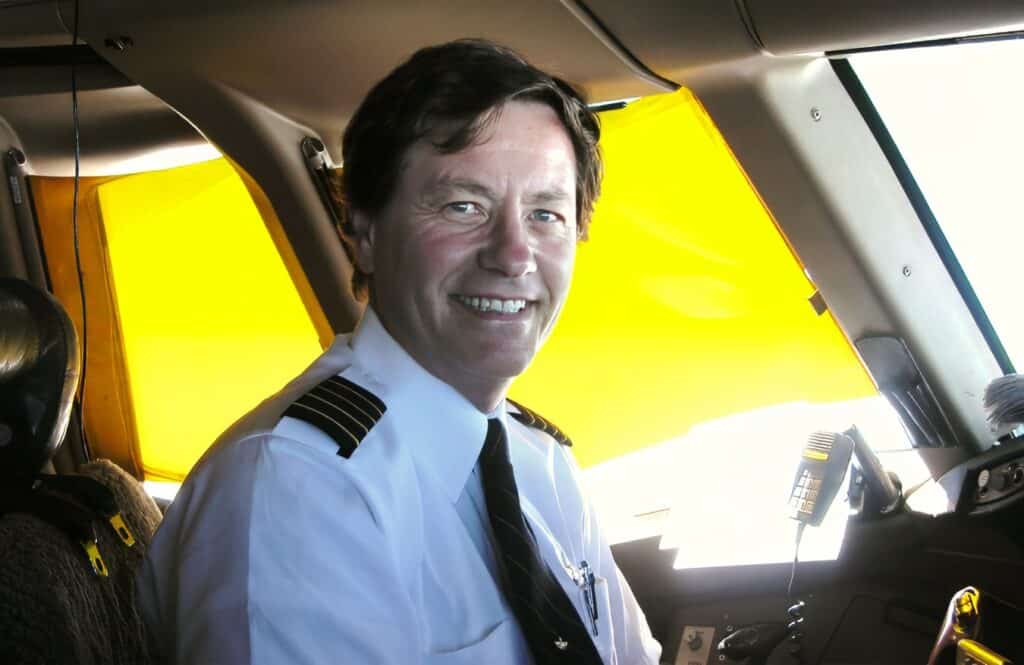
Captain Dan Hanley in the B-777 cockpit
My childhood dream was finally realized! I was sitting in the left seat as captain of my Boeing 777 retirement airplane! It was one of the biggest and most sophisticated commercial airplanes in the world, with a seating capacity of 250 passengers, and working for the largest airline in the world. Over the past 32 years I had flown over 20,000 accident-free hours on seven different commercial aircraft. I had never failed an aircraft check ride, nor the required annual physical examinations. I also didn’t have any Federal Aviation Administration flight violations. My aviation record was exemplary and unblemished. Sitting in the left chair as captain, I felt like I was on top of the world.
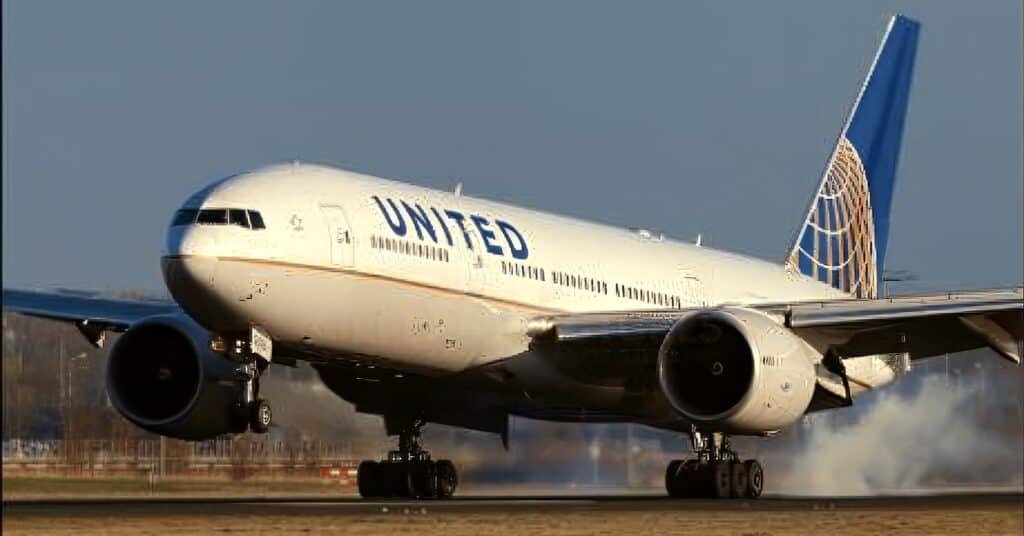
B-777
I moved to Atlanta, Georgia. I commuted to my new pilot domicile at JFK International Airport in New York City. I could pretty much pick and choose my flight schedule because of my seniority. Each month I would bid on a mix of both domestic and international flights. Because the B-777 was a big airplane, my domestic flying was limited to flights from JFK or Newark to cities like Chicago, Denver, Los Angeles, San Francisco, or Seattle. My international flights were mainly to London, with a few trips to Tokyo.
During this time, I was earning a six-figure salary. I would reminisce how far I’d come from learning to fly that little Cessna 150 at Downtown Airpark. I had to work full-time at Midwest Rubber and at the meat distributorship just to survive, while attending Southern Illinois University to earn a degree in Applied Mathematics. I felt that I had come a long way in achieving my version of the American Dream. I was ever-grateful to my Creator for granting me the perseverance to always do my best and “stick it out” when times were tough.
In my earlier days as B-737 captain, my flight attendant crew was four. The new B-777 had 12-14 flight attendants. Although not required, I always tried to attend the preflight briefings for flight attendants to give them an overview of the flight plan and assure them that I was there to help them in any way possible to make their jobs easier. I always remembered LCDR Ishol’s 1973 mantra from my Naval Leadership Course: “Take care of your people, and they will take care of you.”
Crew coordination between the cockpit and cabin was both necessary and mandatory. The flight attendants were my eyes and ears as they carried out their normal duties. If they noticed any unusual activities or unruly passengers, they would notify the purser, the senior flight attendant in first class, and the purser was responsible for alerting me.
During my early airline career, we were required to complete a Command, Leadership, and Resource Management (CLR) training course. It emphasized the importance of coordination between the cockpit and the flight attendants. In the event of flight irregularities or an emergency, the coordination needed to reach out to all available external sources, such as maintenance and dispatch. Each year I was also required to complete a proficiency check in a simulator at the Denver United Flight Training Center. CLR adherence was closely monitored and graded during the examination.
United Airlines had eight pilot bases, or domiciles, located in New York, Washington DC, Miami, Chicago, Denver, Los Angeles, San Francisco, and Seattle. Each domicile had a Chief Pilot, Assistant Chief Pilot, and a management team to assist line pilots as needed. Each domicile also had an ALPA pilot union chairman and other pilot managers to guarantee assistance when needed. When problems or emergencies would arise during flights, the chief pilots and union managers would work together to assist and protect us, or admonish us if we had made mistakes.
There were many ways to address the various issues and situations that might arise while flying. A simple phone call or email to the chief pilot in operations, or to a domicile pilot union official would normally suffice. A “Captain’s Report” could be filed if something irregular or unusual occurred on the ground or in flight. This internal report was usually addressed by company management and/or by union officials.
A “Flight Safety Awareness Report” could be filed for more serious issues or concerns. Unlike the Captain’s Report, this report was also sent to the Federal Aviation Administration (FAA) for disposition, making it a federal issue. This report could be filed by any pilot whenever unsafe practices or situations were observed relating to their flights. A three-member Event Review Committee analyzed these reports, consisting of a company pilot manager, a union pilot representative, and the FAA Principal Operations Inspector (POI) assigned to the airline. These reports were taken very seriously and usually received prompt responses.
Unusual problems or situations were not uncommon on many flights with 250 passengers. It was amazing how unruly some passengers would become after boarding the flight. Crew often joked that some passengers checked their brains at the ticket counter with their luggage before boarding. Most are not aware that interfering with the crew is a violation of federal regulations. It was often necessary to have a passenger service supervisor or, in worst cases the police, meet the aircraft at the jet way. A Captain’s Report would normally be filed for company management in these types of situations.
Since I already had many years of experience as a Naval pilot and as a captain for 10 years with United Airlines, my transition to captain on the B-777 was made with ease. Because of union contractual crew rest requirements, two or three copilots were assigned on long-range overseas flights depending upon the flight length, making my captain’s job even easier.
Captain Dan Hanley is in the middle
During the four years leading up to September 11, 2001, I had flown over 100 flights from New York to London. I was assigned two copilots and we would take off from JFK or Newark to London. I would fly the first two hours to Nova Scotia. A relief copilot would take my place in the cockpit while I rested for a few hours in first class. I would then return to the cockpit for the last two and a half hours and land in London. This was my dream life and the reward for the many years of hard work and unblemished exemplary flying. It was only ten more years to mandatory retirement at age 60. I was looking forward to retiring with a great financial package.
But then the events of 9/11/2001 intervened and completely changed my career trajectory!!!