7. Welcome to the Friendly Skies of United Airlines
Integrity is not a conditional word. It doesn’t blow
in the wind or change with the weather.
—John D. MacDonald
More than seventy years ago, several very concerned and courageous United Airlines airmail pilots secretly huddled together in a downtown Chicago hotel room to organize a pilot labor union to collectively address their concerns to management.
In the early days of commercial aviation, the newly-formed companies were eager to capture lucrative government contracts carrying U.S mail. Many safety issues were being ignored, including pressuring untrained and unqualified pilots to fly in inclement weather with substandard aircraft, while being overworked and underpaid. This practice was widely known as “pilot pushing.” Pilots were losing their lives as a consequence of this careless and reckless scheduling, lacking any voice for safety within the pilot ranks to speak out on behalf of their brother airmen.
United Airlines Captain Dave Benkhe, who arranged the Chicago meeting and spearheaded this safety effort, was successful in creating what later would become ALPA, the Air Line Pilots Association, whose motto today is, “Schedule with Safety.”
The union popularized the Air Line Pilots Association Code of Ethics, which specified the expected moral obligation, responsibilities and professional behavior of each airline pilot union member. Today the first paragraph of the ALPA Code of Ethics states that:
“An Air Line Pilot will keep uppermost in his mind that the safety, comfort, and well-being of the passengers who entrust their lives to him are his first and greatest responsibility.”
In the fall of 1978, I left the Navy and drove from Jacksonville to Atlanta to visit my oldest sister. She was still a flight attendant with Delta Airlines. I was excited to share with her that I was on my way to fulfill my childhood dream of becoming an airline pilot with United Airlines. I then drove to Belleville where my parents and siblings welcomed me home with open arms of love and congratulation for all of my achievements.
My dad had just retired from his lower-level management job at Mobil Oil Corporation after several decades. His finances were now further constrained with his meager pension and Social Security. Since he was bored with his newfound retirement leisure time, I invited him to join me while driving to the Denver United Airlines Flight Training Center at the Denver Stapleton Airport. This was a good time to visit. During my Naval tours I hadn’t been able to visit my parents as often as I wanted as they entered into their twilight years.
On the way to Denver, we spent many hours discussing my past Naval life and hopes for a bright future as a pilot with United Airlines. It had been ten years since my dad proudly watched me lift off in the Cessna 150 for my first solo flight at Downtown Airpark in Collinsville, and he was very excited and extremely proud of my accomplishments.
After spending a few cherished days together, we checked into the company-paid old Gotham Hotel in downtown Denver. I reported as a new-hire probationary flight officer, eager to start my training with seven other classmates.
Reflections of my days as a Naval ensign crept back into my head as I, once again found myself at the bottom of a seniority list. I was now scheduled to serve as a Boeing 737 Second Officer, the lowest rung on the fleet ladder. Unlike the performance-rated military advancement system, a commercial pilot’s seniority number was the sole criteria for advancement up the ranks to bigger airplanes and a higher rank, no matter if you were a highly-qualified Naval test pilot, or even an astronaut. Each commercial pilot had to wait his turn as vacancies for advancement became available due to senior pilot retirements or the purchase of newer airplanes.
On our first training day, a captain representative from the Air Line Pilots Association (ALPA) union, briefed us on the benefits of becoming a union member once we survived our first-year probationary period. The starting salary for new pilots was $9,000 annually, but jumped to a much higher, contractually-provided level after one year. This was a major pay cut just to follow my dream of becoming a commercial airline pilot, since my gross income was $44,000 when I left the Navy in 1978 as a Lieutenant! We were advised that our union represented the safety and legal interests and concerns of line pilots in many instances where management and the Federal Aviation Administration (FAA) sought disciplinary action against them in the not-infrequent incidents and accidents in line operations. If an ALPA pilot was ever involved in an accident or incident, due to possible misstatements before the media or to federal authorities, the back of the union membership card contained a statement that read, “I do not wish to make a statement until I have contacted representatives of the Air Line Pilots Association,” which was designed to legally shield these pilots until a phalanx of ALPA lawyers surrounded them.
Much unlike the mission-oriented military squadrons whose leaders respected the judgment of their pilots, I would soon have to recognize and reorient myself to the “us-versus-them” mentality that existed in the airline industry between pilots and the financial bottom-line-oriented senior level airline managers and the FAA. The military mission provided for our national defense. Being a commercial enterprise, the airline mission involved the production of new capital, not just for aircraft purchases and route expansion, but to fatten the wallets of shareholders and, in particular, the banks and senior-level airline managers.
The Air Line Pilots Association, a member of the AFL-CIO, is the largest pilot union in the world, representing over 50,000 pilots in North America. With the exception of American Airlines, which broke away from ALPA years ago to form the independent Allied Pilots Association, most major air carrier pilots are members of ALPA.
Over the decades, ALPA prestige developed considerable political clout. ALPA had worked hard to pressure airline management, the FAA, and Congress to pass legislation beneficial to airline employees and passengers. Federal contractual regulations were created to ensure the safety and comfort of millions of passengers and the safe operation and maintenance of airplanes. Enhanced safer working regulations for aircrew members, airline employees, and safety professionals were also included.
As would later be seen, the passage of the Airline Deregulation Act of 1978 would drastically change this political power balance and degrade the power and effectiveness of ALPA. We later realized that this was a main point of the wave of deregulations in the industrial sector during the Reagan presidency and beyond. As a result, a lot of our industries and jobs moved to other countries as part of the now-globalized work force.
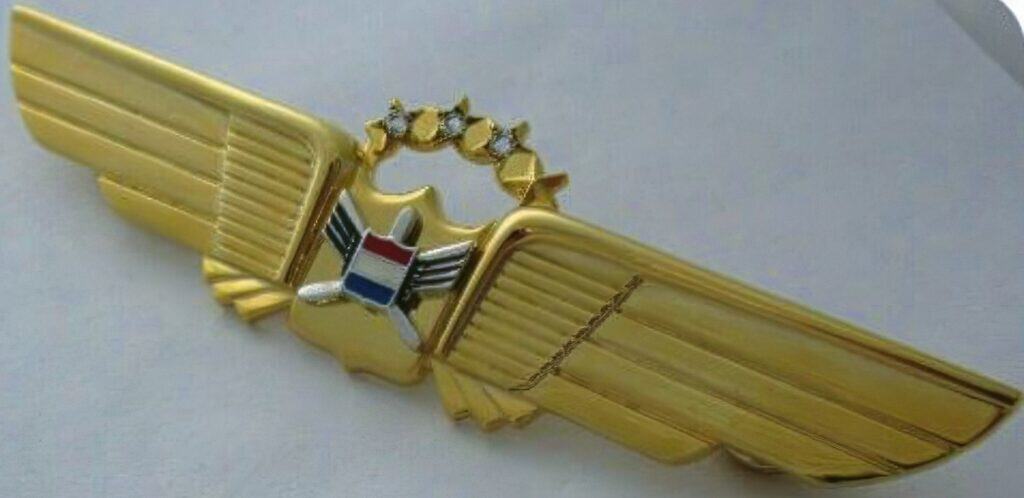
United Pilot Wings
The pilot training was very rigorous. We started with mock-up stationary cockpits and later moved to flight simulators. Intense study of the syllabus was required to memorize aircraft systems and safety procedures. This fast pace was like drinking from a fire hose for a limited time to reduce the cost of training a new pilot. After ten weeks the flight manager met with us in a small conference room and presented our United Airlines Pilot Wings.
I was now well on my way to eventually climbing into the left seat to realize my dream of becoming a commercial airline captain.
My initial line assignment in Chicago landed me in the rear seat as a Second Officer for a B-737-200, the lowliest position amongst pilots in the fleet. After completion of preflight responsibilities, my only duties were to back up the Captain and the First Officer from a small jump seat. I had to ensure that they had an ample supply of coffee at all times and that their crew meals were delivered to the cockpit on command. In a déjà vu moment, I remembered a similar experience starting at the bottom-of-the-totem-pole as an ensign in the U.S. Navy.
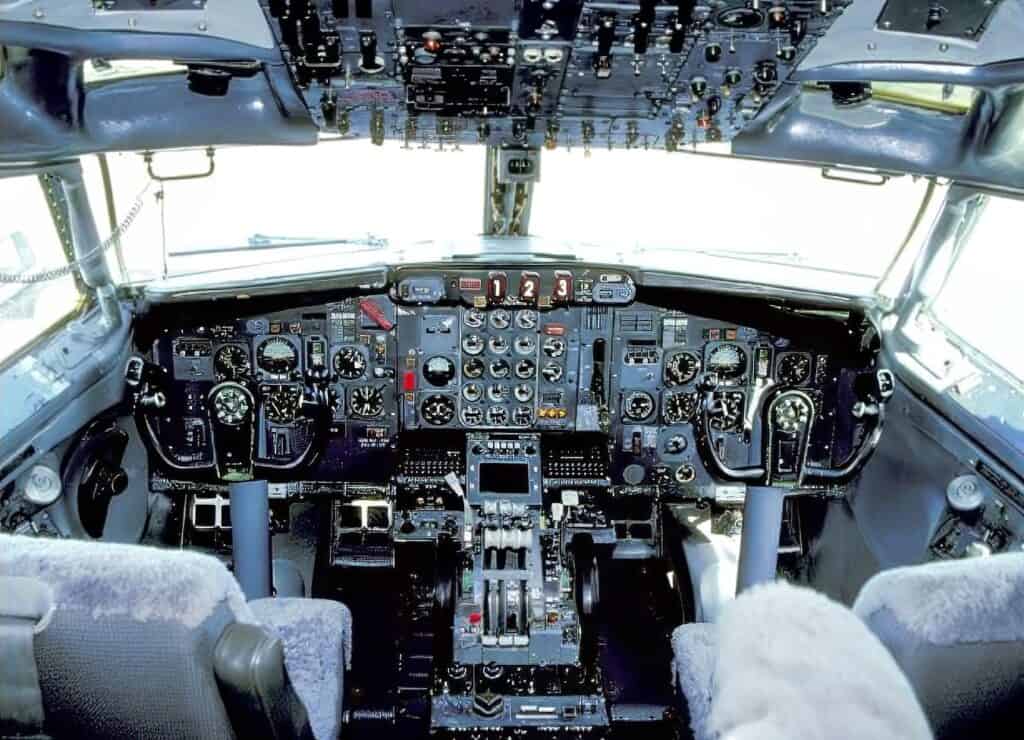
B-737 cockpit
After flying for a short time, while attempting to financially negotiate survival on my paltry income, I heard rumblings of a strike by the International Association of Machinists (IAM) echoing across the company flight operations offices. Sure enough, within a month I found myself without income, as picket lines were set up due to a failure to settle contract differences between management and labor.
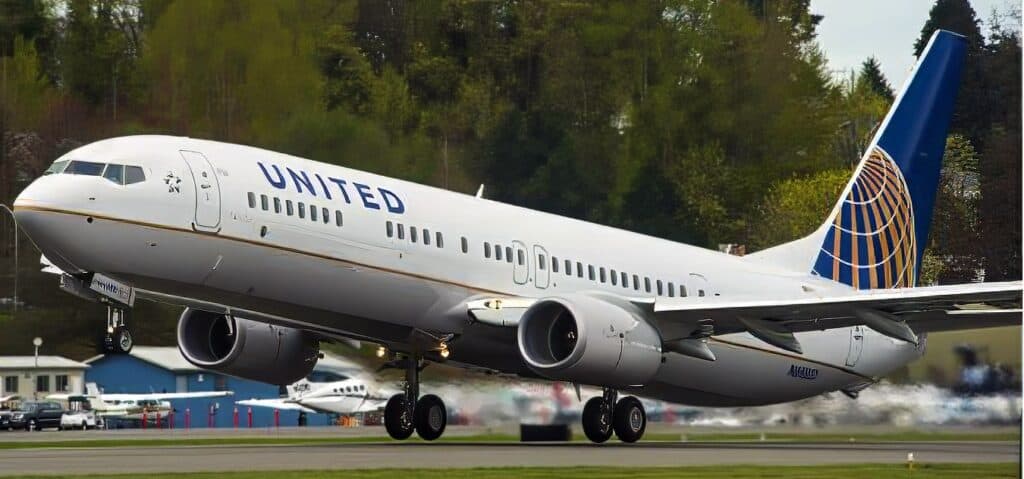
B-737
Welcome to the airline industry!
Desperate for bare essentials such as food and gas at the time, I sought and obtained a position as a “weekend warrior” with a P-3 Naval Air Reserve Unit at Naval Air Station Glenview, just north of Chicago. I had already been planning this, since I wanted to keep current flying as a pilot while awaiting the several-year progression to the right seat as a copilot. Plus, it supplemented my near-starvation pay as a probationary pilot during my first year.
After a contract settlement was reached, I returned happily to work, thankful for my job, but recognized that airline life as a pilot in no way resembled the secure lifestyle I might have had as an officer in the Navy. After qualifying as a Patrol Plane Commander at NAS Glenview and recognizing the multiple benefits provided by again serving as a Naval officer aviator, I vowed to remain attached to the military on weekends as an option, should my path as a commercial pilot experience additional turbulence in the future.
For now, unlike the military squadron environment, consisting of 350 personnel with an open-door communications policy with the skipper, I had joined the ranks of tens-of-thousands of near-anonymous fellow airline employees whose voice to the front office consisted of senior ranking union officers to generically represent our safety and work contract interests.
With new aircraft arriving on the line and the Denver pilot training center operating at maximum capacity, I felt assured it would be but several months before I could advance to the right seat of the B-737. Rumors suddenly swirled that this training pace had been drastically reduced and that pilot layoffs (furloughs) would commence immediately.
This news left me totally bewildered, since United Airlines management had pushed so hard for passage of the Deregulation Act. My delusion was to believe that this meant expansion of their business. Instead, much later I recognized that deregulation was a strategy to carry a surplus of pilots, while training other pilots for the new equipment delivery. When these new pilots joined the line, there would now be a surplus of unneeded pilots for existing aircraft and furloughs would naturally occur. As we later realized, furloughs were only the beginning of how United would fleece the pilots.
United Airlines Chief Executive Officer Richard Ferris had offered pilots the highest-paid contract in the industry with his “Blue Skies” agreement, with a promise to rapidly expand the airline. In return, he demanded pilot contract “productivity improvements” which basically gutted their contract of duty-time safety provisions which had been hard-fought in previous contract negotiations — with the added stipulation that he be permitted to furlough 750 of the recently-hired pilots!
The senior pilots had taken Mr. Ferris at his word. As my career progressed, I would awaken to the atomized corporate culture of selfishness and greed, unlike my past “brotherhood” culture in Naval aviation. Some pilots were devoid of principle and integrity and were indifferent to the “divide and conquer” strategies of their bosses, so long as they expected to benefit.
Sure enough, I was one of the 750 pilots furloughed, which was not a total surprise. I learned that being furloughed wasn’t new in the industry. Other major carriers were doing the same.
I had risked pursuing my dream of becoming an airline pilot. Now I had to look in the mirror and take responsibility for my current career demise.
After recognizing the joblessness potential in the merciless private airline industry, I started searching for alternatives. I emphasized my math degree, which included a strong background in probability and statistics, plus my extensive Naval officer leadership experience. Resumes were sent to All State Insurance in Chicago, the Hearst Corporation in New York City, and the Planning Research Corporation that held a joint military project in Fort Monmouth, New Jersey. After interviewing with each company, I was disappointed that they would only offer a position at a very low-income level. After rethinking my desire to remain current as a “weekend warrior” pilot, I declined all of their offers.
I was demoralized and near starvation and feeling dejected. At the suggestion of my P-3 Reserve Program Manager in Chicago, I applied for a three-year contract to return to active duty as a TAR (Training and Administration of the Reserve) Officer in my squadron. Three years was the minimum available contract period. When the Navy offered me my boss’s job at NAS Glenview with pay equivalent to my airline salary, it was an offer I couldn’t refuse. I would remain flying while furloughed. I would now have a phone “growing out of my ear” for the next three years while working as an operations officer scheduling weekend training flights with pilots and aircrews scattered across the country.
After experiencing the bitter taste of airline and pilot relationships, it was a welcome relief to return to a familiar leadership position where trust, honor, and integrity were expected. I still planned to return to airline flying to fulfill my dream after completing my three-year military contract obligation. As always, I gave my best and worked hard. I periodically scheduled myself for training flights to fulfill the 100 hours per year minimum to remain current.
After being promoted to Lieutenant Commander and proudly wearing my uniform gold oak leaf collar designations, my ground job efforts were once again rewarded with continued excellent report card grades, recommended accelerated promotions for command, and awarded a Navy Achievement Medal.

My uniform gold oak leaf collar designation
Yet I remained stubbornly focused on my dream of becoming a left-seat Captain with the airlines. Near the end of the three-year tour when the time came to declare, I once again declined career-enhancing orders to a higher command by the officer detailer at the Bureau of Personnel in DC. As before, I heard a “click” as he hung up the phone in the middle of my sentence.
As luck would have it, with my planned departure from the Navy, United Airlines began recalling furloughed pilots. My name was included. In October 1984 I drove to New York City, which was to be my recall duty assignment domicile. Having advanced to the back seat as Second Officer on the B-727, I imagined that the heartaches of my commercial aviation career were behind me. This turned out to be another delusion.
For about a month I was happy to be flying again with United. One day while flying, I overheard my captain discussing with the copilot about an upcoming pilot strike. The CEO Ferris “Blue Skies” contract had made the United pilots the highest paid in the industry. It was now due for renegotiation.
CEO Ferris had “changed his mind” about having the “highest paid pilots in the industry.” He claimed that the industry could no longer afford those high salaries for the pilots. He was now seeking a lower “B-scale” pay rate for new hires and demanding additional “increases in productivity” from the rank-and-file pilots. He claimed to be the “800-pound gorilla in the room” and said that he did not “wear round-heeled shoes.” He would force the pilots to strike and then replace the entire pilot group with strike-breaking replacement “scab” pilots, if necessary.
This was the ugliest example of “business leadership at its worst” that I had ever seen in my life at that time. I felt ill. I would later learn that the management fiasco at United was going to be even worse after 9/11.
Since then, many business leaders have learned that this approach doesn’t work. Business leaders cannot demand respect while ignoring the welfare of their work force. Likewise, they cannot expect their workforce to deliver a quality product in a service industry designed to only please returning customers. Trying to maximize revenue at the expense of your workforce doesn’t work over the long haul. Take care of your people and they will take care of you; the reverse is also true.
Poor morale in any workplace, due to intransigent and top-down management styles, is not conducive to productive employees. It cannot and should not exist as a constant distracting factor, particularly in the cockpit work environment, because that overbearing psychic burden greatly impinges on flight safety. The Captain in the left seat, according to Federal regulations, must have the freedom to make operational decisions that are totally unimpeded by extraneous financial, legal, and political pressures. This Federally-regulated process is referred to as the “Captain’s Authority,” which has been greatly eroded since the day Congress passed the Airline Deregulation Act of 1978.
This negative erosion persists to the present day. Given the emphasis of many mass media reports, you might be surprised to learn that it has become even worse since the deadly and terrorizing events of September 11, 2001.