9. The Seemingly Once Impossible Dream
Hold fast to dreams, for if dreams die, life is a
broken-winged bird that cannot fly.
—Langston Hughes
So, after twenty-four years in waiting since my first solo on October 31, 1968, at Downtown Airpark, after spending years in training for advancement to the left seat of a commercial jet liner, after numerous detours and bumps along the flight path to this destination, the long-awaited moment had finally arrived, that moment when I landed my initial captain bid in the Boeing 737-300 aircraft. Privately, I was very pleased with myself that I had endured the challenging course to achieve my childhood dream and comforted to know my family was quite proud of my perseverance and achievements as well.
Success seems largely a matter of hanging
on after others have let go.
—William Feather
But the momentum of the industry’s trajectory through the vagaries of deregulation would continue in ways I was, as yet, unable to predict, and to surpass, in even more egregious ways, the fundamental challenges I had already witnessed along my career path.
My initial Captain-simulator training was, ironically, provided by a fellow former Naval aviator, instructor Captain Hal Short, a former Marine C-130 aviator who had recently retired as an Air Force F-4 pilot. As the trainer, he served as my copilot in the right seat. Because of my previous B-767 “glass cockpit” copilot experience, this training seemed a breeze due to the numerous system and procedural similarities. My previous years of Naval P-3 left seat experience, and the leadership qualities embraced from excellent past leaders, made my transition to the rank of captain easier than I had anticipated.
To become a captain, the Air Transport Pilot (ATP) Federal regulations require passing an initial simulator check with an FAA inspector. Captain Hal Short served as my First Officer and the check ride went smoothly. After the final approach and landing, Captain Hal Short turned to shake my hand, saying, “Congratulations, Captain Hanley.” Tears welled up in my eyes. I had at last reached my lifelong goal of Captain in the left seat of a commercial airplane.
After the simulator debriefing with the FAA inspector, I rushed to the nearest public phone to happily share the news with my proud dad and the rest of my family. I felt a rush of joy comparable to making my first safe solo landing so many years before. Nothing, not even the subsequent upgrades to bigger aircraft equipment as captain, would ever match the sense of satisfaction and self-fulfillment I experienced on that day.
Obstacles are what you see when you
take your eyes off the goal.
—Author Unknown
In my early days as a B-737-300 captain, I flew with copilots of mixed qualifications. Bankruptcies at Pan Am Airways, Eastern Airlines, and others had left the airline market glutted with highly qualified applicants. Labor protective provisions of the Airline Deregulation Act designed to ensure retention of seniority were being ignored. Many “old head” pilots hired by United Airlines found themselves illegally at the bottom of the seniority list. Partly because of the Equal Employment Opportunity Commission (EEOC) lawsuit that United Airlines had lost years earlier, they started hiring marginally qualified pilots who wouldn’t have qualified several years earlier.
As a result, some months I would be flying with “old head” copilots and noticed that the old “ensign/chief petty officer” syndrome was creeping back into my psyche for the ride. Then there were the foreign copilots who could barely speak English. Many captains complained that the language barriers compromised safety, even though many of the new copilots had been given remedial English training in Denver by United Airlines. Because of language barriers and varying skill levels of the copilots, my leadership skills were often challenged on many flights.
My path to becoming a captain in the left seat of United Airlines took many long years of hard work, starting with a distinguished career as a Navy pilot. Yet there were times that I became demoralized to see so many young and inexperienced pilots being hired to copilot these new modern commercial airplanes.
Fortunately, this demoralized feeling would quickly pass when I flew with a 55-year-old, highly experienced, ex-Eastern captain as copilot. Captains like him had been robbed of their jobs and seniority by Frank Lorenzo, an uncaring government system, and the complacency of the pilot union who had chosen to not enforce the seniority labor protections written into the Airline Deregulation Act.
I was sad because I had no shoes,
until I met a man who had no feet.
—Indian proverb
I quickly learned to cultivate an “attitude of gratitude” to counter this dismal cultural quagmire. Not only did I have a job, I was now a captain in the left seat of a commercial airline, which was the fulfillment of my childhood dream.
I also felt very sad about so many highly qualified pilots who had lost everything as a result of management/labor strife. At times life seems to deal us with some very cruel blows. Although these “retread” pilots were thankful for employment, many of their brethren were “retired” from flying careers for the rest of their lives.
Little did I realize at the time that I would get a very sobering and most distasteful dose of the same medicine a decade later, when United Airlines management administered the “career euthanasia” prescription deemed appropriate for safety whistleblowers during the post-9/11 era.
Other than the stresses and strife of serving as a “chameleon” captain dealing with the varied experience levels and backgrounds of my first officers, the next three and a half years of flying to many U.S. cities, as well as Canada, Mexico, and Central America were relatively uneventful. Oh, I dealt with a myriad of disruptive passengers, and with sundry flight attendants, first officers, ticket agents, mechanics, weather/traffic/maintenance delays, and various other management-induced “situations.” But these were matters which line captains routinely faced on a day-to-day basis as part of their job duties.
Once the aircraft departs from the gate, the captain shares responsibility for the safe conduct of his flight with his dispatcher on the ground. But the final decisions are made by the authority vested by federal aviation regulations in the captain. As such, there are times when the loneliness of command creeps into his life, a singular aloneness not unlike that of a small-town mayor, chairman of the board, or some other position of leadership. At such times, I was most thankful for the experience gained from my previous flying days in Naval. Throughout my days as captain, matters of passenger and aircrew safety, security, and comfort remained clear in my mind’s eye and paramount on my list of concerns until my final days in aviation.
The first few lines of the Air Line Pilots Association Code of Ethics were etched eternally into my mind. They read as follows:
“An Air Line Pilot will keep uppermost in his mind that the safety, comfort, and well-being of the passengers who entrust their lives to him are his first and greatest responsibility.
He will never permit external pressures or personal desires to influence his judgment, nor will he knowingly do anything that could jeopardize flight safety.
He will remember that an act of omission can be as hazardous as a deliberate act of commission, and he will not neglect any detail that contributes to the safety of his flight, or perform any operation in a negligent or careless manner.
Consistent with flight safety, he will at all times operate his aircraft in a manner that will contribute to the comfort, peace of mind, and well-being of his passengers, instilling in them trust in him and the airline he represents.
Once he has discharged his primary responsibility for the safety and comfort of his passengers, he will remember that they depend upon him to do all possible to deliver them to their destination at the scheduled time.”
The industry would, of course, introduce new factors to take into account during this time period.
For decades, Boeing, McDonald-Douglas, and Lockheed had the stranglehold on the U.S. commercial aircraft industry, but with the multi-national meltdown of the industry through code-share arrangements with foreign air carriers, Airbus, located in Toulouse, France, was determined to get a foothold in the U.S. commercial aircraft market.
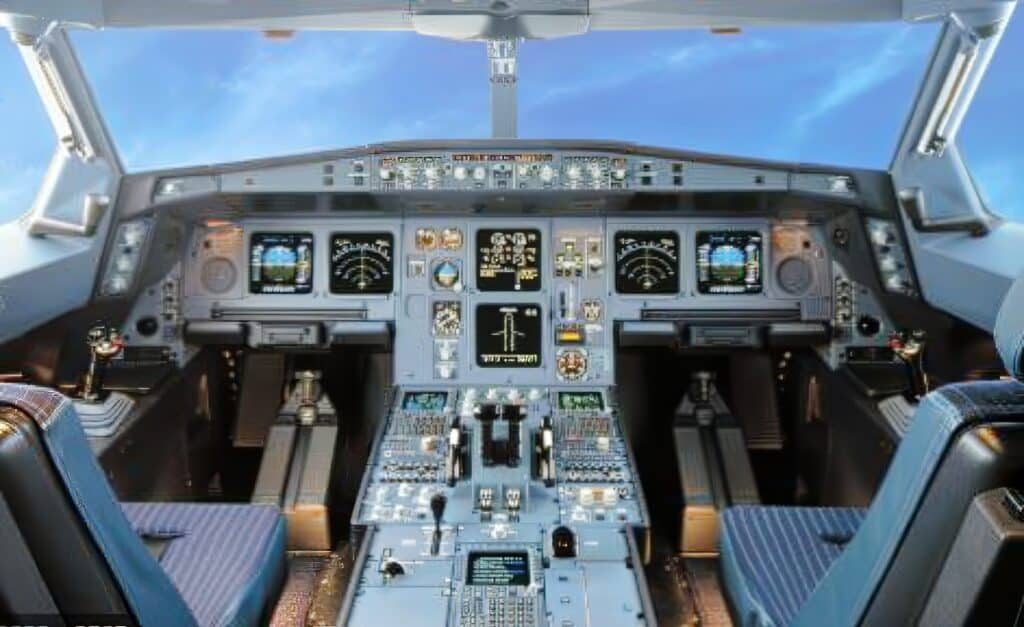
A-320 cockpit
In an effort to introduce the A-320 aircraft into the U.S. market, the Airbus conglomerate offered United Airlines a most attractive leasing arrangement for a large number of planes. Many new pilot vacancies were now available and my seniority allowed me to bid as a captain on the A-320.
This state-of-the-art modern fly-by-wire airplane exceeded other designs in many ways. Consider the side stick flight controller. It electronically controlled hydraulic actuators for the elevators, ailerons, and rudder. Previous designs used a yoke (steering wheel) in front of the pilot that used mechanical linkages to provide similar control. Unlike previous generations, the throttle levers did not move when the auto throttles were engaged, but had automated throttle setting detents for the various flight regimes. These combined systems also created an “Alpha Floor,” which prevented the pilots from stalling the plane even with full back-stick/up elevator pressure.
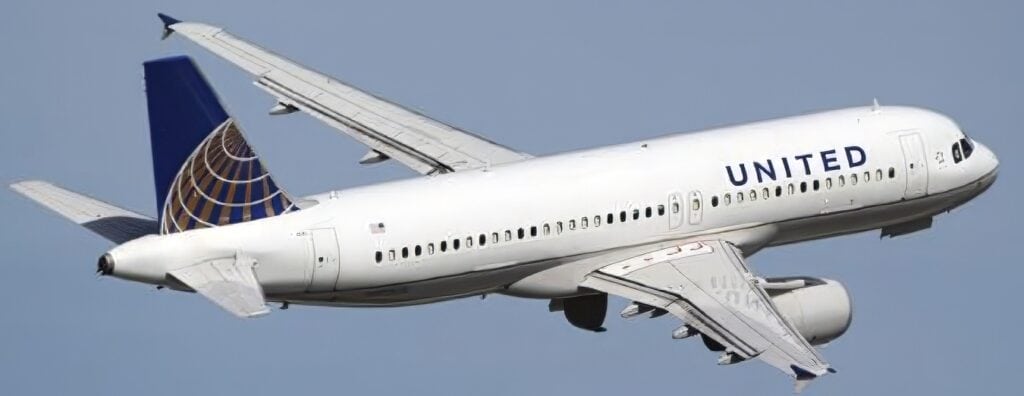
A-320
Many pilots were hesitant to bid for positions on the A-320 because of these advanced and sophisticated systems. Many felt that they would be losing some of the control that they normally had when flying traditional airplanes. Many pilots dubbed these new Airbus planes the “Scare Bus”, largely because the advanced systems were so foreign to them from what they were used to.
The “Scare Bus” offered the airlines enhanced efficiency for pilot employment and aircraft. Pilots rated for this series of airplanes permitted cross-utilization of assets. The cockpit geometry/systems design for these and other late generation airplanes were identical, thus providing greater cost savings on training. These newer aircraft also required fewer pilots in the cockpit. All of these changes provided enhanced profit opportunities for the airlines going with the “Scare Bus”.
During my Airbus training in Denver, my instructor, a former Pan Am captain who had previously worked as an instructor for Airbus, explained another aspect of the globalization of the aircraft industry. He pointed out that this highly-automated generation of airplanes was also designed for third world countries where the trained pilot pool was insufficient to meet hiring needs, thus allowing airlines in those countries to hire less qualified pilots.
Consider what it’s like for pilots to operate in the congested cockpit “office space” of a commercial jet traveling 600+ mph. Pilots must be aware of many critical operating parameters and able to act quickly and safely as needed. They are operating in a three-dimensional very dynamic environment in which the airplane and Mother Nature can require extra attention. Paying attention to relevant details can spell the difference between life and death. Normal flights can be interrupted by numerous in-flight emergencies and other passenger conflicts which compound complexities for pilots.
It is only in the imaginations of some passengers that pilots relax in the little room in front of the airplane, sipping coffee and eating their crew meals while the automated systems “control” the airplane. Please!
This deluded thinking often seems to be shared by airline corporate managers. They don’t sit at desks traveling 600+ mph in three-dimensional space. Their secretaries put their calls on hold while they are busy. Line pilots don’t have this luxury. Executives are never expected to ditch their corporate desks in the Hudson River on a moment’s emergency notice. Yet they proudly reward themselves with excessive bonuses for their imagined “exemplary leadership” roles and “outstanding safety” records.
After completing my Airbus 320 training, I returned to Chicago to fly mostly domestic routes over the next five years.
When I was hired in 1978 with 750 other pilots from a qualified pool of over 60,000 pilots, an applicant would not even be considered for an interview if he was approaching 30. About 80% were trained by the military and 20% civilian trained. All had impressive pilot resumes. Remember that the United Airlines EEOC lawsuit now required the airline to hire minorities who might have lesser qualifications than other available highly-qualified pilots. United Airlines also started hiring 40–50-year-old pilots recently retired from the military, as well as pilots with lesser qualifications that wouldn’t even be considered in 1978.
Over the next 5 years as captain, I had to deal with this wide range of experiences among the A-320 copilots. These newly hired pilots were advancing to captain in the left seat in record time, often in less than 5 years. Most of these pilots had no union or airline experience. They lacked the perspective to recognize the privilege inherent in their advancements. They also didn’t concern themselves with the “trivialities” of union labor issues. Some even considered the seniority system as an impediment to captain of a larger airplane and greater income. I felt that some of them would have “steered my side of the airplane” into a mountain if they thought it would help advance their career more rapidly.
Very few pilots bothered to read the history of the Air Line Pilots Association that was chronicled in the multi-volume Flying the Line: The First Half Century of the Airline Pilots Association by George E. Hopkins. Without understanding this history, many pilots were ignorant of the many battles fought with airline management to ensure contractually-provided safety nets, a seniority system, and a fraternity of pilots unified in support of this system. These pilots didn’t care. They got their job with the largest airline in the free world. They could only see the promised “Blue Skies” for their career path ahead. Of course, this brief period of job security preceded September 11, 2001.
Those who cannot remember the past
are condemned to repeat it.
—George Santayana
The United Pilots union was no longer speaking with one voice. This was exacerbated by hiring “old head” pilots from other carriers that had been vaporized by deregulation. The “old head” military pilots were just thankful for receiving a copilot income that exceeded their former senior military officer pay that would now enhance their retirement income. Most of these newly hired pilots were clueless about the true value of pilot unionism and clueless about safety and many other considerations.
Effective unionism requires unity within the membership. The corporate tactics that were employed, along with legislation and selective enforcement, were very effective in destroying the usefulness of the union. We sensed that our union had become an ineffective shell.
Divide and Conquer!
—Airline management
With the fragmentation of an apathetic union membership, deluded in their false beliefs of “job security” with the largest and fastest-growing commercial airline in the world, what could possibly detour pilot career advancement?
Fate, the Hunter.
I now felt that it was time to upgrade to the big league of international flying the wide body airplanes. I had five years of flying the advanced Airbus 319-320 series as captain, plus years of experience as captain flying in the military. I only had ten years left before retiring at the mandatory age of 60 years.
After advancing through so many sophisticated state-of-the-art aircraft with advanced technology as captain, the aging B-747-400 seemed like a step backwards for international flying. These aircraft were mainly used on very long-range flights. Many “old head” captains became lifeless “grey ghosts” for the last few years of their careers. This can happen because of the circadian disruption of their sleep cycles as they navigate across many time zones on long 14-hour flights.
The newer multi-function B-777 airplane was being used on a greater variety of flight schedules than the B-747-400. It was being used for both domestic and international long-range flights. I decided that this would provide better contentment and better health. I therefore bid to fly as captain on the B-777 to complete my 40-year path to retirement.
That is what I thought at that time. Unfortunately, unforeseen world disasters and my advocating for improved safety rules would conspire to undo my career as a commercial pilot.