8. Labor Strife Abounds
Gentlemen…I do not have round-heeled shoes.
—Former United Airlines CEO Richard J. Ferris
The signs of the time read:
“United Passengers Deserve United Pilots.”
“UAL Management Asleep at the Wheel AGAIN?”
“UAL Board: WHEN is enough ENOUGH?”
In May 1985, just seven months after my furlough recall, I found myself carrying an ALPA picket sign at JFK International Airport in New York City. This was reminiscent of my new hire experience with the IAM (International Association of Machinists) strike in 1979. I was now walking alongside the pilots who had agreed to the “Blue Skies” contract previously negotiated with CEO Richard Ferris. All pilots were now being kicked in the teeth. CEO Ferris wanted to break the contract from four years prior which would mean more financial pain for the pilots. This was a bitter pill to swallow. Continental and Eastern pilots also went on strike. Several years later, President Bush declared that “Strikes are a thing of the past.”
Deregulated airlines also concocted a new “code share” business arrangement. The flight was actually operated by a single “administrating carrier” with its own flight number. Then multiple airlines would market the seats for that flight with their own flight number as though they were the carrier. This deceptive practice made it harder to know ahead of time which airline you might actually be flying with.
UAL (United Airlines Holdings Inc) formed the United Airlines Star Alliance. This emulated the “alter-ego” New York Air strategy founded by Eastern Airlines CEO Frank Lorenzo, whose theft of Texas Air assets had been used to create a low-cost carrier. Over the following months, Lorenzo would use a multi-phased strategy to essentially plunder and empty the assets of Eastern Airlines into his own pockets, tossing 33,000 employees out of work. In the 1980’s, ads proclaimed that it was “morning in America,” “greed was good,” and that “who says you can’t have it all?” Some business executives took this belligerent and selfish attitude completely to heart, insisting that they owed nothing to anyone. The off-shore banking tax-dodge scam burgeoned as they tried to hide their gains.
As was pointed out in the last chapter, CEO Ferris was boasting that United now had the highest paid pilots in the industry. But he also boasted that he was the “eight-hundred-pound gorilla in the room.” Now he changed his mind and claimed that the market “could no longer bear the pilots’ high pay scales.” He now insisted on hiring new pilots at the drastically reduced “B-scale” pay.
Realizing what deregulation of the airlines was leading to, the United pilots were seeking a “scope clause” provision in their contract as short-range domestic flights were being given to regional airlines.
Bound by the antiquated provisions of the Railway Labor Act, after a 30-day cooling off period in which neither side agreed to binding arbitration by a neutral party, ALPA strike coordinator, Captain Rick Dubinsky, calmly ordered pilots to strike — to march off the property in a national teleconference viewed by many employees at each pilot domicile in the country.
It took 29 days to reach a contract settlement. All employees were allowed to return to work, except for a group of Miami and Honolulu flight attendants who were being held hostage by management. The contract now included the “B-scale” salary rate for new hires that CEO Ferris had demanded before the strike. This widened the trust-gap between pilots and management. It also enraged the segregated and lower paid 570 new-hire pilots joining the ranks. It even isolated the “scab” pilots who had betrayed the union “brotherhood” by crossing the picket lines. All of this resulted in further splitting the pilot ranks and the union.
For true unionism to be an effective political force, strength must be derived through strong and credible leadership, solid rank-and-file member unity, and in large numbers. With dissention amongst union leaders, a much-diminished unity amongst a shriveled union membership, coupled with (later-discovered) legal proof of Ferris’s intention of destroying organized labor on the property, these combined union illnesses served as the death knell for union strength at United Airlines.
The abhorrent betrayal of trust by top managers caused many seasoned captains and others to work to the rule of law and contract, not willing to bend to company demands for improved productivity or alleged violation of other flight safety issues. This form of passive resistance and its outcomes resulted in some being sent to the Denver Training Center for “remedial training.” Many line pilots understood this to be punitive, but it also served as a systematic and subliminal management threat to others who might have similar ideas. The blatant ostracizing and belittlement of “scab” pilots, deemed traitors by ALPA line pilots, forced managers to devise professional protective provisions for these scabs. These included counseling by chief pilots for the offenders, to shield the few who dared to betray the “brotherhood” of the now-disintegrating union.
During times of labor peace, pilots legally and safely cut corners to enable a smooth operation. But during times of labor strife, pilots would no longer do this and the system was drastically slowed down to cause delays and disruptions. It was called a WOE (Withdrawal of Enthusiasm) program.
The time-tested and proven adage of “taking care of your people will assure that they will take care of you” served to be true in both directions through positive and negative means. Employee loyalty to the company and its management had reached an all-time low that was not to be experienced again until after the 9/11 era. Poor morale in a service industry, with its attendant disloyalty and apathy, becomes a prescription for financial disaster. In the cockpit it cannot be tolerated for safety reasons. The cavalier “put up, shut up, or find a job elsewhere” attitude of flight managers only added fuel to the fire during the tumultuous labor strife at the airline. This was definitely not the quality of leadership style I had observed during my military service.
Flight managers who did not impose this stern company management process of suppression quickly found themselves sidelined. They were dismissed from their office responsibilities. This resulted in an overabundance of weak “yes men,” devoid of personal leadership capabilities occupying those same positions.
A “sick list” monitoring program was also initiated by pilot managers. They suspected that some pilots were taking extra time off by claiming to be ill. Our contract allowed time off for illnesses. This of course created another safety issue by intimidating sick pilots to continue flying when they were too ill and they should have been home recovering. The Federal Aviation regulations specifically state that airline pilots must report for work physically fit and well rested. Unfortunately, this renewed and unsafe practice of “pilot pushing” continues to this day.
Sloppy maintenance led to serious landing gear problems
Nine months after the strike we were faced with a serious catastrophe because of sloppy maintenance procedures. I was still serving as a Second Officer on the Boeing 727. We had just lifted off from Oklahoma City to Chicago O’Hare on a routine flight with sixty passengers. When we retracted the landing gear, a warning light indicated that the nose wheel was not locked in the “up” position. After we had climbed to our assigned level-off altitude, the newly-designated Captain Ken Keneally ordered copilot Bob Falco to extend the landing gear. Three green lights indicated that the landing gear was fully extended. When the landing gear was then retracted, the panel lights indicated that the landing gear was safely locked in the “up” position.
After doing a thorough review of the maintenance log, we found serious problems. Multiple crews had to employ the “manual gear extension procedure” to lower the landing gear by using the hand crank under a panel in the cockpit floor. This is definitely considered an irregular procedure for lowering the landing gear. This procedure had been used three times in the previous two days! After each maintenance inspection, the aircraft was simply placed back in regular passenger service without actually fixing the underlying problems!
During the short flight to Chicago, I reminded the captain of the previous maintenance write-ups. I also suggested that we review the manual gear extension checklist in my airplane manual before arriving in busy O’Hare. We went over the procedure in detail together. With clear weather ahead and plenty of fuel, the captain requested a long straight-in final approach to runway 4R at O’Hare. This would give us sufficient room to slow the aircraft early to approach speed, extend the landing gear, and complete the gear crank procedure through rotation of the hand crank under the cockpit floor.
O’Hare Chicago Approach Control honored our request for special landing requirements. When the gear handle was placed in the “down” position, both of the main landing gear lights changed from red to green as the main gear supposedly extended and locked down. Unfortunately, the nose gear indicator light remained red, which indicated that the nose gear was not down. It was still locked in the wheel well. Also, the wind blast noise we normally heard with the nose gear properly extended “down” was not heard. This confirmed the red light at my work station.
With my manual page opened, I informed the captain that I was starting the manual gear extension procedure. This involved rotating the crank three turns in one direction to open the nose wheel doors, followed by three turns in the opposite direction to manually unlock the massive hook that held the nose gear locked in the wheel well.
Unfortunately for us pilots and the passengers, the nose wheel doors did not indicate “opening” on my enunciator panel after finishing the first three turns of the gear crank. We were now out of checklist items to try. The nose gear could not extend down without the doors opening. We did a close-in fly-by of the O’Hare tower and a controller with binoculars confirmed our determination. We were then told to fly out over Lake Michigan to a block of airspace above outbound air traffic and below inbound traffic. We then consulted via radio with maintenance engineers on the ground in San Francisco.
Over the next forty-five minutes, the captain and copilot followed instructions from the San Francisco maintenance engineers in an attempt to unlock the doors and nose gear. We flew multiple positive and negative G-force maneuvers. The airplane was rapidly banked into a steep climb for positive “G” forces, followed by pushing the nose down for the negative forces. Pushing the nose sharply down caused every unsecured item in the aircraft to rise towards the ceiling, including me. If the nose gear was jammed up, these maneuvers were designed to hopefully unlock the jam to extend the nose wheel.
During these maneuvers, I was on the floor behind the pilots. My body was contorted while complying with varying instructions for the gear crank handle and the hydraulic pump configurations. My body was pinned to the floor during positive “G” force maneuvers and I was hanging on for dear life to the gear crank handle as my body lifted off the floor during negative “G” force maneuvers.
Our passengers were warned ahead of time what to expect by the captain over the public address system. Our poor passengers had never experienced these strange “G” forces in an aircraft before. They were heard through the closed cockpit door shrieking en masse in terror.
So much for passenger comfort. As a result of labor-management strife, apathy and lax maintenance procedures had created a crisis situation where we all had to suffer.
After much deliberation, it was determined that our best remaining alternative was to make a “nose gear up” landing at O’Hare on runway 4R. The airplane’s nose would have to skid on the runway. Emergency equipment was dispatched to runway 4R while we circled and completed the appropriate irregular checklist. The captain had me brief the flight attendants that all passengers were to quickly deplane down the escape slides when we came to a stop on the runway. The captain made a similar announcement over the PA system so that the passengers would be prepared. The captain is given discretion and final authority in a situation like this. I quickly read aloud the cockpit evacuation procedures for all of us as we turned into the final approach for landing.
We had a normal landing on the main wheels. The captain then used the brakes to gently slow the aircraft while slowly dropping the nose to the runway. When the airflow over the horizontal stabilizer diminished, the nose dropped with a hard thud as the aircraft skidded on its nose several feet to an uneventful stop on the runway centerline.
We had a successful evacuation with no injuries. The O’Hare flight managers were nearly catching the flight attendants and crew with open arms as we were the last to deplane down the escape slides. We were whisked off to an awaiting bus and away from passengers to prevent and protect us from making any public statements.
We had a brief visit with senior company managers and the United Airlines flight surgeon in the flight office. The cockpit crew were then assigned to private hotel rooms across the street at the O’Hare Hilton and asked to not speak to anyone about our aircraft emergency. We had followed emergency procedures to the letter. At that time, I felt that these restrictions were for our own professional protection, as well as legally protecting United Airlines from litigation in the future. We were asked to report to the O’Hare chief pilot early the next morning.
After complying with all instructions from yesterday, we met the next morning with company officials. We were then joined by the Chicago ALPA chairman who advised us that in the aftermath of the strike, “both sides held political hostages.” We were all driven in a company van to United’s executive offices in Elk Grove Village to meet with many senior managers where we would be treated as “heroes.” The ALPA chairman suggested that we simply smile and accept their “warm” welcome.
We were given an unwarranted standing ovation by managers for being “heroes.” In reality, we were just doing the job we had been paid to do as pilots. We were then hustled off to the corporate board room to be treated to lunch along with senior vice presidents of Operations. There we learned that the nose gear drag brace had in fact broken, lodging the nose gear in the wheel well. Jim Guyette, the executive vice-president of Operations remarked that he had maintenance spend the entire night checking to ensure that there was nothing more that the cockpit could have done to extend the nose gear. Jim’s remark made me wonder if perhaps he had been witch-hunting for a reason to hang the cockpit crew. Perhaps not, but there seemed to be no reason to trust the management.
After the brief lunch, we were escorted to meet with the FAA Principal Operation Inspector (POI) whose responsibilities included the safety oversight of all phases of aircraft and aircrew operations at United Airlines. Without looking up, he jotted notes of our answers to his questions. I asked whether he was aware that this same aircraft had been taken out of service on three separate occasions in the previous two days for the same reason? (The underlying problem was never fixed and the airplane had simply been put back into service.) He replied that he was aware of that, without elaborating.
It was only later that I discovered that this same FAA Operations Inspector had been a former United Airlines mechanic. The pilot report was submitted to United Airlines and the NASA Ames Research Center in Moffett Field, California. No further reports were made of this near catastrophic incident.
Advanced to B-727 First Officer
Shortly thereafter I qualified as a B-727 copilot. The window seat had a much nicer view than the flight engineer panel. I no longer felt like a Navy ensign and actually got to pilot my first commercial jet plane.
Removing CEO Lorenzo and his management team
During this same time frame, United ALPA leadership were secretly meeting with New York investment bankers. They were negotiating for employee ownership of United Airlines. It had become clear that the current United management had no desire to mend fences after the strike. They intended to increase pressure on employee groups and especially the pilots. After the “Blue Skies” lies and the ALPA union’s marginalized political situation at United, most of the pilots were tired of the labor strife, including furloughs and broken promises. They wanted to work with new management and hoped to turn over a new leaf in labor and management relationships.
We have previously mentioned the young and fanatical Frank Lorenzo. He reared his ugly head as CEO of Texas International Airlines and created the “alter ego” non-union carrier New York Air. This was the advent of low-cost air carriers. This and subsequent developments demonstrated that it is always helpful in business ventures to have the United States President and his cabinet as close friends.
Lorenzo gobbled up Continental Airlines. He then essentially destroyed Eastern Airlines through an allegedly legal theft of their “crown jewel” assets after the last major pilot strike in the country. He established an anti-labor template for other airline managers to emulate. Lorenzo was eventually ousted through political pressure from ALPA and other key political figures. Eastern Airlines and Pan Am Airways used to be preeminent air carriers in our country. They were financially vaporized by Lorenzo’s maneuvers. This left thousands of highly qualified pilots at the bottom rung of the seniority ladder and pleading for a job. The “labor protective provisions” (LPP) of the Airline Deregulation Act were supposed to ensure retention of pilot seniority at another airline, yet were never implemented. These provisions had simply been “window dressing” to disguise the cunning and total take-down of the pilots as a working class.
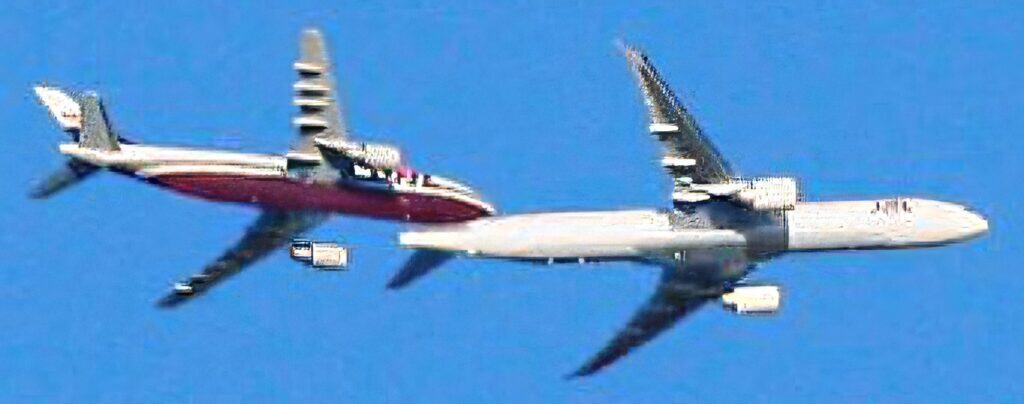
Near miss with DC-9 heading towards our B-727
Late one afternoon we were flying a B-727 into O’Hare from New York’s LaGuardia. While descending from 10,000 feet to our assigned 5,000-foot level-off altitude, we were warned that an American DC-9 had “busted” their assigned altitude. Looking out of our cockpit window, the DC-9 was heading directly to us from the two o’clock position. While the captain was flying, I scanned the horizon from the forward side of the aircraft to the opaque cloud deck beneath us.
To my astonishment, the DC-9 popped through the clouds in a climb on a constant bearing directly towards us on a collision course! As the approaching target aircraft grew larger in my side window, the captain initiated an immediate emergency climb to avoid collision. The DC-9 passed only a few hundred feet below us. If the captain hadn’t taken immediate evasive action, I wouldn’t be writing this book. The excited approach controller gave us a phone number and requested that we contact approach control after landing. The captain complied.
Half an hour later we were in O’Hare flight operations and met by the chief pilot and senior managers. They had already spoken with the O’Hare tower. We were each asked to write a report describing in detail what had happened, to the best of our recollection. But the United Airlines managers suggested that the FAA air traffic control personnel wanted us to acknowledge that there was at least 500 feet vertical separation and a few miles horizontal separation from the DC-9 as the closest point of closure during the incident.
I realized that they were asking us to provide false details in an attempt to conveniently conceal a potential near mid-air collision from the media and the traveling public. I advised them that this would compromise my honesty and integrity as a pilot. I was certain that we would have collided if the captain hadn’t taken immediate emergency action. A few hours later, my report honestly described what I had observed.
My report was therefore rejected by the FAA. My similar report for the Air Line Pilots Association was also rejected by their lawyers. Who did ALPA now represent?
The nose gear failure to deploy when flying to Chicago O’Hare and the recent near miss with the DC-9 when preparing to land at O’Hare could have been fatal. I was also concerned about other sloppy incidents that could have jeopardized the safety of pilots, crew, & passengers. It was becoming obvious that our supposedly independent and redundant government airline oversight managers and key airline personnel were working together in a political arrangement with senior level ALPA managers in a quid pro quo arrangement at times to cover each other’s backsides. This was unethical and immoral and put passengers, pilots, and crew at risk while concealing life-or-death safety issues from the uninformed traveling public
I had observed many similar events while employed by United Airlines. Did the senior ALPA leaders actually believe in the cherished ALPA Code of Ethics anymore? Did the Federal Aviation Administration actually believe in and want to enforce their mission statement, which proclaimed that our airline industry would be the safest and most efficient in the world? It had become obvious to me that none of these senior people cared about those objectives, pilots, crew, or passengers!
A few years after the 1985 United Airlines pilot strike, the employees took control away from CEO Richard Ferris and his management team with cooperative financial help from Wall Street banks. The new ownership used an Employee Stock Option Program (ESOP). The majority ownership was now held by the pilots, crew, and other employees. The ESOP agreement meant that each pilot had to give up about 25% of his pay over the next five years and nine months. This relinquished salary was to be used as capital to purchase stock that could not be sold by a holder until that pilot reached the mandatory 60 years retirement age.
This stock agreement was a disaster for me! I initially bought stock at $65 per share and it split once. I had about $650,000 in stock. The stock plunged to about $1.00 per share after 9/11. A corrupt and mob connected judge granted United permission to sell our stock out from under us without our personal permission. When they railroaded me into a false medical grounding, I received only $40,000. That was a huge rip off!
Chrysler executive Gerry Greenwald was recruited as Chairman and Chief Executive Officer by ALPA and the other unions. He had a sterling resume as a financial “whiz” and business leader in the auto industry. It was also important that he came from outside the airline industry. CEO Greenwald was welcomed as a breath of fresh air after the disasters of CEO Richard Ferris. Throughout his tenure as CEO, Mr. Greenwald consistently promised that pay reductions made to purchase United stock would “snap back” to pre-ESOP levels before the next contract, which was almost six years later.
Many pilots praised this attempt to hopefully establish labor peace and harmony between the pilots and management, while working towards a common bond of trust. Of course, many senior pilots close to retirement were in opposition to the ESOP plan for a variety of reasons.
Advanced to Copilot of the B-767
Implementation of the ESOP plan provided United with over $2 billion capital transfusion, including tax advantages and other savings. This enabled purchase of much needed new B-737-300, B-757, & B-767 aircraft. This again meant “upward” seat movement for pilots, with route expansion and more revenue generation for United. It seemed that we had finally set the stage for a genuine “win-win” arrangement.
When new airplane equipment vacancies were posted, I applied for copilot of the B-767 right seat and successfully completed the requisite training. The B-767 is a twin-engine plane with very advanced and highly-sophisticated avionics. The second officer was no longer needed, which further reduced United’s operating costs. It also relieved the cockpit crew of many responsibilities associated with earlier avionics designs. The B-767 was also more efficient with fuel.
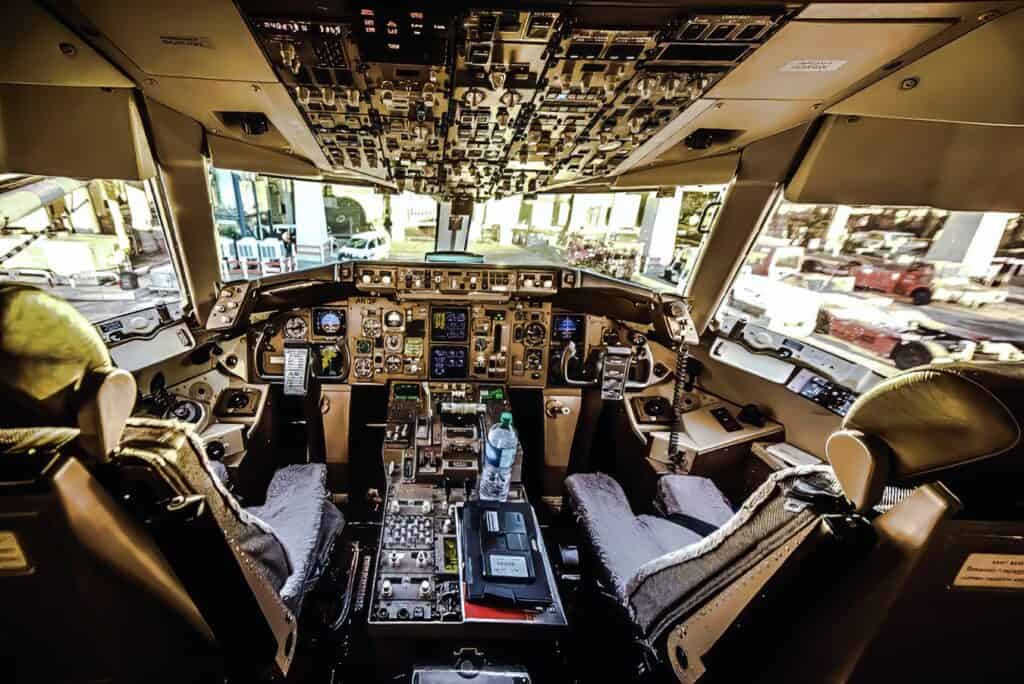
B-767 cockpit
My initial B-767 assignment was based out of Chicago. I was tired of the expense and traffic of commuting from Long Island to LaGuardia, JFK, & Newark. I decided to move to Atlanta and commute from there to Chicago. Most of these aircrew bases are located in the most expensive cities in the country. Therefore, nearly fifty percent of the aircrew commute from cities other than their assigned base. Many prefer quality of life over the expensive big-city lifestyles. Depending on the city pairs, the cost savings could be about 35%.
The B-767 had newly-designed CRT “glass instrument” display screens containing a wealth of flight information. I realized that my days of flying aircraft with round instruments that had begun at Downtown Airpark many years ago had come to an end. The new aircraft avionics had vastly improved automated navigation systems derived from military cruise missile guidance technology. Once the computer was properly programmed and the autopilot engaged, the aircraft could automatically fly to its destination. It could even do an automated landing and keep the aircraft on the runway centerline with automatic braking.
Technological advancements were improving operational efficiencies. Computers were taking over many of the tasks previously handled by skilled pilots. This improved automation suggested that new hire pilots for the new advanced airplanes didn’t need to be as qualified as pilots for the airplanes using older technologies. Since United was purchasing many new airplanes, a new hiring boom was underway. The Pentagon was losing pilots to the airlines. To reduce the loss of talented and qualified pilots to the airlines, they had raised contract obligations for military pilots in an effort to retain them. This would also help reduce training costs for military pilots.
Without enough military pilots seeking employment, United had to find new pilots elsewhere. They started hiring pilot “casualties” from Eastern and other financially-crippled airlines. Of course, those senior pilots went to the bottom of United’s seniority list, since the LPP guidelines of the Deregulation Act had never been implemented. Retired military pilots who were already receiving a government pension and civilian pilots with minimum flight time also went to the bottom of the seniority list.
Although I was very excited and feeling privileged to become a copilot on the advanced B-767, an ominous foreboding crept in on me. Advancing technology was reducing pilot responsibilities. It was also reducing the number of pilots needed in the cockpit of these newer airplanes. The pilot job market would be collapsing as a result. On the other hand, recent United developments were enhancing shareholder value. We pilots were now employee shareholders with labor peace at hand. With former Chrysler executive and financial wiz Gerry Greenwald at the helm of United as Chief Executive Officer, I felt comfortable knowing that my ride up the seniority ladder might finally smooth out until retirement.
My massive 25% pay reduction used to purchase ESOP stock was partially offset by a pay raise for becoming a copilot on the B-767. CEO Greenwald repeatedly promised that our pay would snap back after the completion of the five-year and nine-month ESOP contract. By then I expected to be a Captain in the left seat. With employee stock and a defined benefit pension in my back pocket, I expected to sail into my final ten years as Captain and enjoy my golden years of retirement beyond 60.
Or so I thought.
I flew as copilot for a few more years on the B-767 with some very capable captains who finally retired from the left seat. Just as it had been with the leadership examples set by my previous Naval commanding officers, many of these “old heads” had seen the better days of commercial aviation recede behind them. Along the way they had gained a lot of experience and knowledge. They were willing to share and I was eager to learn from them on my way to becoming a Captain in the left seat.
In aviation and other professions and in life, there is always another lesson to be learned from the experiences we meet. My guard would always rise when I met another pilot who imagined in their delusion that they knew it all. Fate always had a way of reaching out and biting their posteriors in ways that their blind arrogance least expected. Show me a pilot who has “never” been humbled by a horrible landing or another embarrassing incident numerous times in their career, and I will show you a liar. The synergistic efforts of Mother Nature and fate can sometimes produce a humbling combination of blows to the overblown ego of any pilot at any time without advanced warning.